
Introduction
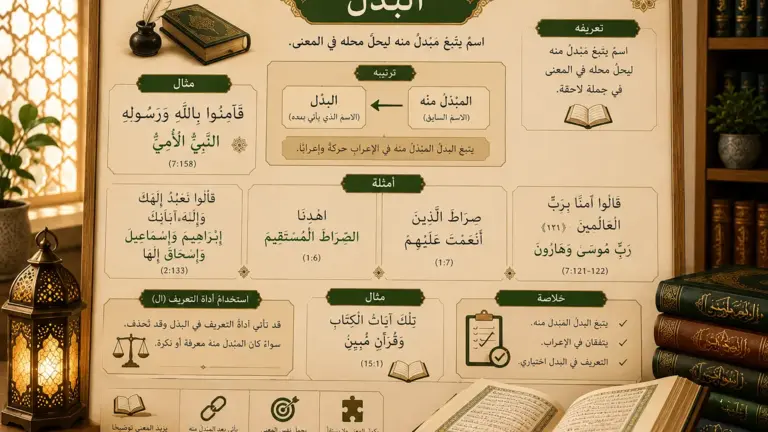
The term الْبَدَلُ refers to a noun that replaces a previously mentioned noun in a subsequent sentence.
In this structure, the replacing noun, known as الْبَدَلُ, follows the noun it replaces, termed as الْمُبْدَلُ مِنْهُ.
For instance:
فَآمِنُوا بِاللَّـهِ وَرَسُولِهِ النَّبِيِّ الْأُمِّيِّ
So believe in Allah and His Messenger, the unlettered prophet (7:158)
The vocal ending (harakah) of الْبَدَلُ mirrors that of the الْمُبْدَلُ مِنْهُ. For illustration:
قَالُوا نَعْبُدُ إِلَـٰهَكَ وَإِلَـٰهَ آبَائِكَ إِبْرَاهِيمَ وَإِسْمَاعِيلَ وَإِسْحَاقَ إِلَـٰهًا
They said, "We will worship your God and the God of your fathers, Abraham and Ishmael and Isaac - one God. (2:133)
اهْدِنَا الصِّرَاطَ الْمُسْتَقِيمَ
Guide us to the straight path - (1:6)
صِرَاطَ الَّذِينَ أَنْعَمْتَ عَلَيْهِمْ
The path of those upon whom You have bestowed favour (1:7)
قَالُوا آمَنَّا بِرَبِّ الْعَالَمِينَ ﴿١٢١﴾ رَبِّ مُوسَىٰ وَهَارُونَ
They said, "We have believed in the Lord of the worlds. The Lord of Moses and Aaron." (7:121-122)
The use of the definite article "ال" in the substitute is optional. Consequently, if the original noun is definite, the substitute can be indefinite, and vice versa.
تِلْكَ آيَاتُ الْكِتَابِ وَقُرْآنٍ مُّبِينٍ
These are the verses of the Book and a clear Qur'an. (15:1)
Conclusion
This lesson on Arabic nuances concludes here. Insha’Allah, our subsequent session will delve into the various unorthodox verbs in Arabic.
Al-dirassa Institute invites you on a linguistic journey with our expert teachers to master the Arabic language. Should you wish to further your studies, we welcome your inquiries.
Book your free trial of 30 minutes
Registration form



No Comments
No comments yet.
No comments yet.