
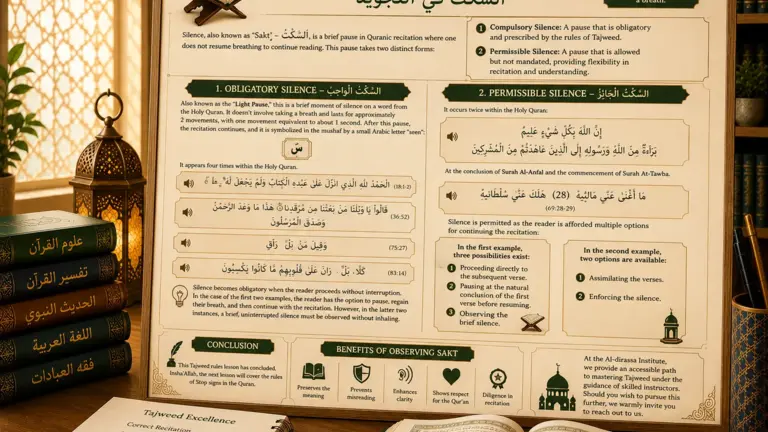
Silence, also known as 'Sakt' - السَّكْتُ, is a brief pause in Quranic recitation where one does not resume breathing to continue reading. This pause takes two distinct forms:
- Compulsory Silence: A pause that is obligatory and prescribed by the rules of Tajweed.
- Permissible Silence: A pause that is allowed but not mandated, providing flexibility in recitation and understanding.
1. Obligatory Silence - السَّكْتُ الْوَاجِبُ
Also known as the "Light Pause, " this is a brief moment of silence on a word from the Holy Quran. It doesn't involve taking a breath and lasts for approximately 2 movements, with one movement equivalent to about 1 second. After this pause, the recitation continues, and it is symbolized in the mushaf by a small Arabic letter "seen":

It appears four times within the Holy Quran.
الْحَمْدُ لِلَّهِ الَّذِي أَنزَلَ عَلَىٰ عَبْدِهِ الْكِتَابَ وَلَمْ يَجْعَل لَّهُ عِوَجًا ۜ ﴿١﴾ قَيِّمًا لِّيُنذِرَ بَأْسًا شَدِيدًا مِّن لَّدُنْهُ وَيُبَشِّرَ الْمُؤْمِنِينَ الَّذِينَ يَعْمَلُونَ الصَّالِحَاتِ أَنَّ لَهُمْ أَجْرًا حَسَنًا
(1)[All] praise is [due] to Allah, who has sent down upon His Servant the Book and has not made therein any deviance. (2) [He has made it] straight, to warn of severe punishment from Him and to give good tidings to the believers who do righteous deeds that they will have a good reward (18:1-2)
قَالُوا يَا وَيْلَنَا مَن بَعَثَنَا مِن مَّرْقَدِنَا ۜ ۗ هَـٰذَا مَا وَعَدَ الرَّحْمَـٰنُ وَصَدَقَ الْمُرْسَلُونَ
They will say, "O woe to us! Who has raised us up from our sleeping place?" [The reply will be], "This is what the Most Merciful had promised, and the messengers told the truth."(36:52)
وَقِيلَ مَنْ ۜ رَاقٍ
And it is said, "Who will cure [him]?" (75:27)
كَلَّا ۖ بَلْ ۜ رَانَ عَلَىٰ قُلُوبِهِم مَّا كَانُوا يَكْسِبُونَ
No! Rather, the stain has covered their hearts of that which they were earning. (83:14)
Silence becomes obligatory when the reader proceeds without interruption. In the case of the first two examples, the reader has the option to pause, regain their breath, and then continue with the recitation.
However, in the latter two instances, a brief, uninterrupted silence must be observed without inhaling. This distinction emphasizes the nuanced nature of these pauses in Quranic recitation.
2. Permissible Silence - السَّكْتُ الْجَائِزُ
It occurs twice within the Holy Quran:
إِنَّ اللَّهَ بِكُلِّ شَيْءٍ عَلِيمٌ
بَرَاءَةٌ مِّنَ اللَّهِ وَرَسُولِهِ إِلَى الَّذِينَ عَاهَدتُّم مِّنَ الْمُشْرِكِينَ
At the conclusion of Surah Al-Anfal and the commencement of Surah At-Tawba.
مَا أَغْنَىٰ عَنِّي مَالِيَهْ ۜ ﴿٢٨﴾ هَلَكَ عَنِّي سُلْطَانِيَهْ
My wealth has not availed me. Gone from me is my authority." (69:28-29)
Silence is permitted as the reader is afforded multiple options for continuing the recitation:
In the first example, three possibilities exist:
- Proceeding directly to the subsequent verse.
- Pausing at the natural conclusion of the first verse before resuming.
- Observing the brief silence.
In the second example, two options are available:
- Assimilating the verses.
- Enforcing the silence.
Conclusion
This Tajweed rules lesson has concluded. Insha'Allah, the next lesson will cover the rules of Stop signs in the Quran.
At the Al-dirassa Institute, we provide an accessible path to mastering Tajweed under the guidance of skilled instructors. Should you wish to pursue this further, we warmly invite you to reach out to us.
Book your free trial of 30 minutes
Registration form


No Comments
No comments yet.
No comments yet.