
Introduction
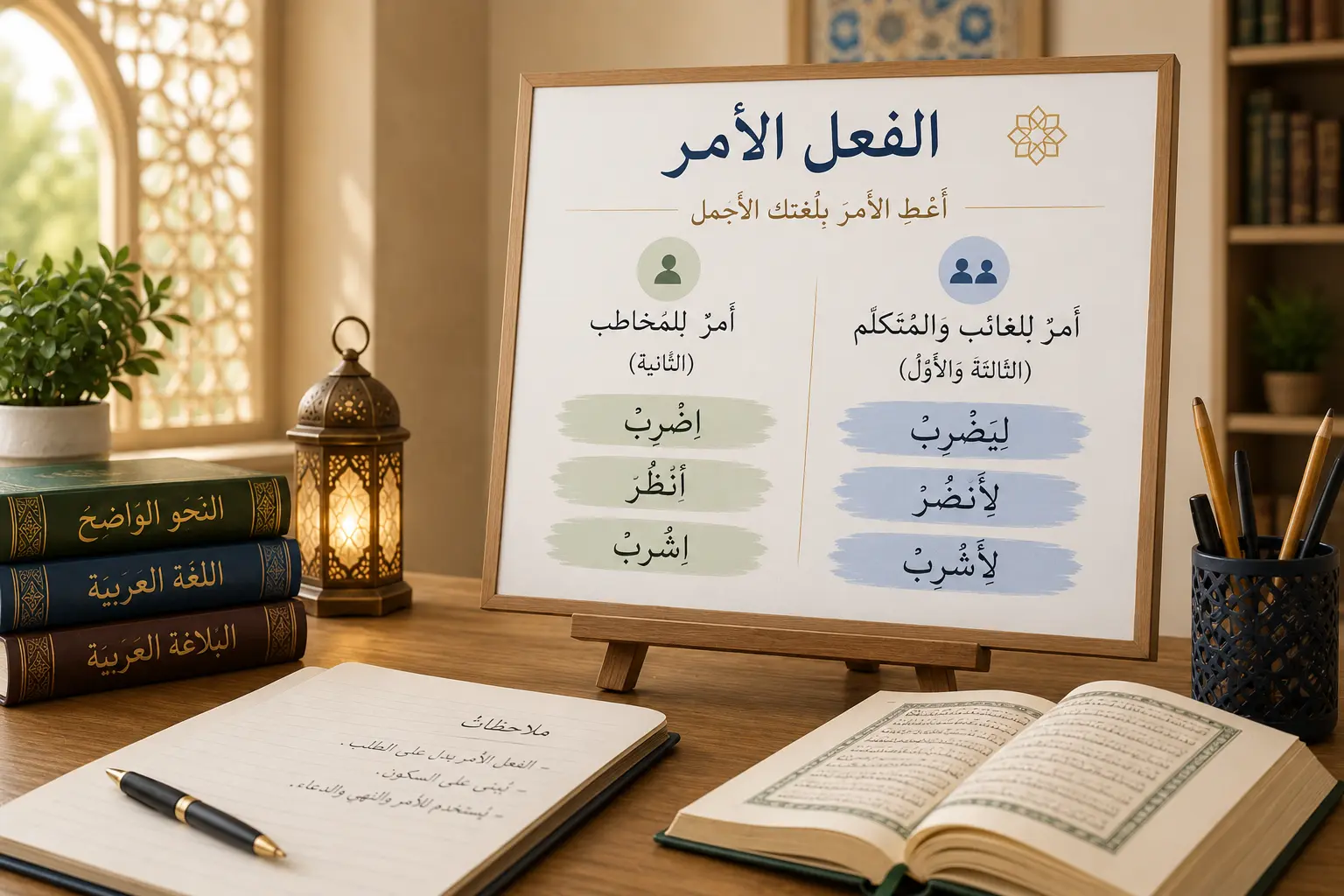
The imperative is the verb form used to give a command. In Arabic, the imperative is of two types:
- Direct command
- Indirect command
The direct command is used with the second person.
Examples:
| اِضْرِبْ | Strike |
| اُنْظُرْ | Look |
| اِشْرَبْ | Drink |
Sometimes, the command is given to the third or first person. In this case, it is called the indirect command - الْأَمْرُ لِلْغَائِبِ و الْمُتَكَلِّمِ.
Examples:
| لِيَضْرِبْ | Let him strike |
| لِأَنْصُرْ | Let me help |
| لِأَشْرَبْ | Let me drink |
1. The direct command - أَمْرٌ لِلْمُخَاطَبِ
As mentioned earlier, the direct command is formed from the second person of the imperfect tense, both masculine and feminine. Let us now see how the second-person imperfect form is changed into the imperative form of the verb.
The verb فَعَلَ in the imperative
Second person masculine
| Singular | Dual | Plural |
| تَفْعَلُ | تَفْعَلانِ | تَفْعَلُوْنَ |
| you do | you both do | you do |
Second person feminine
| Singular | Dual | Plural |
| تَفْعَلِيْنَ | تَفْعَلانِ | تَفْعَلْنَ |
| you do | you both do | you do |
Step 1: In the imperfect-tense table above, remove the second-person marker of the imperfect tense, “تَ”, as shown in the table below:
Second person masculine
| Singular | Dual | Plural |
| فْعَلُ | فْعَلانِ | فْعَلُوْنَ |
Second person feminine
| Singular | Dual | Plural |
| فْعَلِيْنَ | فْعَلانِ | فْعَلْنَ |
Step 2: Add a hamza in place of ت. If the second radical of the imperfect verb carries a fatḥah or kasrah, the prefixed hamza ا will carry a kasrah. If the second radical carries a ḍammah, the prefixed alif will also carry a ḍammah. Likewise, the prefixed hamza in the imperative never carries a fatḥah.
Second person masculine
| Singular | Dual | Plural |
| اِفْعَلُ | اِفْعَلانِ | اِفْعَلُوْنَ |
Second person feminine
| Singular | Dual | Plural |
| اِفْعَلِيْنَ | اِفْعَلانِ | اِفْعَلْنَ |
The prefixed hamza is called hamzat al-wasl - هَمْزِةُ الْوَصْلِ, le hamza est joint. Bien que présent dans l’écriture, il n’est pas lu. Il joint le mot précédent au mot suivant.
Step 3: The final letter of the masculine singular takes a sukūn. All the other nūn letters - ن - are dropped, except for the feminine plural. Therefore, the imperative is as follows:
Second person masculine
| Singular | Dual | Plural |
| اِفْعَلْ | اِفْعَلا | اِفْعَلُوْا |
| Do | Do, both of you | Do |
Second person feminine
| Singular | Dual | Plural |
| اِفْعَلِيْ | اِفْعَلا | اِفْعَلْنَ |
| Do | Do, both of you | Do |
The verb فَتَحَ in the imperative
Second person masculine
| Singular | Dual | Plural |
| اِفْتَحْ | اِفْتَحَا | اِفْتَحُوْا |
| Open | Open, both of you | Open |
Second person feminine
| Singular | Dual | Plural |
| اِفْتَحِيْ | اِفْتَحَا | اِفْتَحْنَ |
| Open | Open, both of you | Open |
The verb ضَرَبَ in the imperative
Second person masculine
| Singular | Dual | Plural |
| اِضْرِبْ | اِضْرِبَا | اِضْرِبُوْا |
| strike | strike, both of you | strike |
Second person feminine
| Singular | Dual | Plural |
| اِضْرِبِيْ | اِضْرِبا | اِضْرِبْنَ |
| strike | strike, both of you | strike |
The verb نَصَرَ in the imperative
Second person masculine
| Singular | Dual | Plural |
| اُنْصُرْ | اُنْصُرَا | اُنْصُرُوا |
| Help | Help, both of you | Help |
Second person feminine
| Singular | Dual | Plural |
| اُنْصُرِيْ | اُنْصُرَا | اُنْصُرْنَ |
| Help | Help, both of you | Help |
Examples of direct imperative verbs used in the Holy Quran
وَأَنِ اعْبُدُونِي ۚ هَـٰذَا صِرَاطٌ مُّسْتَقِيمٌ
And [did I not command you] to worship Me? This is a straight path. (36:61)
ارْكُضْ بِرِجْلِكَ ۖ هَـٰذَا مُغْتَسَلٌ بَارِدٌ وَشَرَابٌ
Strike [the ground] with your foot: here is cool water to wash with and to drink. (38:42)
وَقُلْنَا يَا آدَمُ اسْكُنْ أَنتَ وَزَوْجُكَ الْجَنَّةَ
And We said: “O Adam, dwell in Paradise, you and your wife.” (2:35)
2. Hamzated verbs in the imperative
Hamza as the first radical
The imperative is formed by removing the imperfect tense marker ت. The hamza as the first radical of the hamzated verb is also removed. No prefixed hamza is used to form the imperative of such verbs.
The verb أَكَلَ in the imperative
Second person masculine
| Singular | Dual | Plural |
| كُلْ | كُلَا | كُلُوْا |
| Eat | Eat, both of you | Eat |
Second person feminine
| Singular | Dual | Plural |
| كُلِيْ | كُلا | كُلْنَ |
| Eat | Eat, both of you | Eat |
Examples of hamzated verbs in the imperative used in the Quran
فَكُلِي وَاشْرَبِي وَقَرِّي عَيْنًا
So eat, drink, and be comforted. (19:26)
خُذْ مِنْ أَمْوَالِهِمْ صَدَقَةً تُطَهِّرُهُمْ وَتُزَكِّيهِم بِهَا وَصَلِّ عَلَيْهِمْ
Take from their wealth a charity by which you purify them and bless them, and pray for them. Indeed, your prayer is reassurance for them. And Allah is All-Hearing, All-Knowing. (9:103)
وَكُلَا مِنْهَا رَغَدًا حَيْثُ شِئْتُمَا
and eat from it freely wherever you wish. (2:35)
However, some hamzated verbs depart from this pattern and take hamzat al-wasl in the imperative form.
The verb أَذِنَ in the imperative
Second person masculine
| Singular | Dual | Plural |
| اِئْذَنْ | اِئْذَنَا | اِئْذَنُوْا |
| Permit | Permit, both of you | Permit |
Second person feminine
| Singular | Dual | Plural |
| اِئْذَنِي | اِئْذَنَا | اِئْذَنَّ |
| Permit | Permit, both of you | Permit |
Hamzaas the second radical
The verb سَأَلَ in the imperative
Second person masculine
| Singular | Dual | Plural |
| سَلْ - اِسْأَلْ | سَلَا - اِسْأَلَا | سَلُوْا- اِسْأَلُوْا |
| ask | ask, both of you | ask |
Second person feminine
| Singular | Dual | Plural |
| سَلِي - اِسْأَلِيْ | سَلا - اِسْأَلا | سَلْنَ - اِسْأَلْنَ |
| ask | ask, both of you | ask |
Le schéma du verbe سَأَلَ peut être formé avec ou sans hamzat al-wasl comme indiqué dans le tableau ci-dessus.
Examples of verbs with hamza as the second radical in the imperative
سَلْ بَنِي إِسْرَائِيلَ كَمْ آتَيْنَاهُم مِّنْ آيَةٍ بَيِّنَةٍ
Ask the Children of Israel how many clear signs We gave them! (2:211)
وَاسْأَلِ الْقَرْيَةَ الَّتِي كُنَّا فِيهَا
And ask the town in which we were. (12:82)
Hamza as the third radical
The verb قَرَأَ in the imperative
Second person masculine
| Singular | Dual | Plural |
| اِقْرَأْ | اِقْرَءَا | اِقْرَءُوْا |
| Read | Read, both of you | Read |
Second person feminine
| Singular | Dual | Plural |
| اِقْرَئِي | اِقْرَءَا | اِقْرَئْنَ |
| Read | Read, both of you | Read |
Examples of verbs with hamza as the third radical used in the Holy Quran
اقْرَأْ بِاسْمِ رَبِّكَ الَّذِي خَلَقَ
Read in the name of your Lord who created. (96:1)
3. The imperative form of weak verbs
Weak verbs: first radical و or ى
Lorsque le premier radical du verbe faible est و, le signe de the imperfect à the imperfect ت est supprimé et l’impératif est formé sans hamzat al-wasl.
The verb وَعَدَ in the imperative
Second person masculine
| Singular | Dual | Plural |
| إِيْئَسْ | إِيْئَسا | إِيْئَسْنُوْا |
| weep | weep, both of you | weep |
Second person feminine
| Singular | Dual | Plural |
| إِيْئَسِي | إِيْئَسَا | إِيْئَسْنَ |
| weep | weep, both of you | weep |
Lorsque le verbe faible a le premier radical ى, l’impératif est formé en supprimant le signe de the imperfect à the imperfect ت et en ajoutant hamzat al-wasl.
The verb و عد in the imperative
Second person masculine
| Singular | Dual | Plural |
| عِدْ | عِدَا | عِدُوْا |
| Promise | Promise, both of you | Promise |
Second person feminine
| Singular | Dual | Plural |
| عِدِي | عِدَا | عِدْنَ |
| Promise | Promise, both of you | Promise |
Hollow verbs in the imperative
Here, the imperative is formed without hamzat al-wasll et en supprimant le signe de the imperfect à the imperfect ت.
The verb قَالَ in the imperative
Second person masculine
| Singular | Dual | Plural |
| قُلْ | قُولَا | قُولُوْا |
| say | Say, both of you | Say |
Second person feminine
| Singular | Dual | Plural |
| قُولِي | قُولَا | قُلْنَ |
| say | Say, both of you | Say |
The verb بَاعَ in the imperative
Second person masculine
| Singular | Dual | Plural |
| بِعْ | بِيْعَا | بِيْعُوْا |
| Sell | sell, both of you | sell |
Second person feminine
| Singular | Dual | Plural |
| بِيْعِي | بِيْعَا | بِعْنَ |
| Sell | sell, both of you | sell |
Defective verbs
Ici, le signe de the imperfect de the imperfect, ت est supprimé et hamzat al-wasl is prefixed to the imperative mood. The weak letters of the verb are omitted in the masculine and feminine singular forms.
The verb دَعَا in the imperative
Second person masculine
| Singular | Dual | Plural |
| أُدْعُ | أُدْعُوَا | أُدْعُوْا |
| Invite | invite, both of you | invite |
Second person feminine
| Singular | Dual | Plural |
| أُدْعِي | أُدْعُوَا | أُدْعُوْنَ |
| Invite | invite, both of you | invite |
The verb رَمَى in the imperative
Second person masculine
| Singular | Dual | Plural |
| إِرْمِ | إِرْمِيَا | إِرْمُوْا |
| Throw | Throw, both of you | Throw |
Second person feminine
| Singular | Dual | Plural |
| إِرْمِي | إِرْمِيَا | إِرْمِيْنَ |
| Throw | Throw, both of you | Throw |
The verb لَقِيَ in the imperative
Second person masculine
| Singular | Dual | Plural |
| اِلْقَ | اِلْقَيَا | اِلْقُوْا |
| meet | meet, both of you | meet |
Second person feminine
| Singular | Dual | Plural |
| اِلْقِي | اِلْقَيَا | اِلْقَيْنَ |
| meet | meet, both of you | meet |
The verb رَأَى in the imperative
Second person masculine
| Singular | Dual | Plural |
| رَ | رَيَا | رَوْا |
| See | See, both of you | see |
Second person feminine
| Singular | Dual | Plural |
| رَيْ | رَيَا | رَيْنَ |
| See | See, both of you | see |
This is because رَأَى is a weak hamzated verb with an irregular pattern.
Examples of weak verbs in the imperative
كُلُوا وَارْعَوْا أَنْعَامَكُمْ ۗ إِنَّ فِي ذَٰلِكَ لَآيَاتٍ لِّأُولِي النُّهَىٰ
“Eat and pasture your cattle.” Indeed, in that are signs for people of understanding. (20:54)
قُلْ فَأْتُوا بِالتَّوْرَاةِ فَاتْلُوهَا إِن كُنتُمْ صَادِقِينَ
Say: “Bring the Torah and recite it, if you are truthful.” (3:93)
ادْعُ إِلَىٰ سَبِيلِ رَبِّكَ بِالْحِكْمَةِ وَالْمَوْعِظَةِ الْحَسَنَةِ
Invite to the way of your Lord with wisdom and good instruction. (16:125)
4. The imperative form of doubly weak verbs
Here, the imperative is formed by removing the weak letter ى and the imperfect marker ت.
The verb وَقَى in the imperative
Second person masculine
| Singular | Dual | Plural |
| قِ | قِيَا | قُوْا |
| Protect | Protect, both of you | Protect |
Second person feminine
| Singular | Dual | Plural |
| قِيْ | قِيِا | قِيْنَ |
| Protect | Protect, both of you | Protect |
Book your free trial of 30 minutes
Registration form
Example used in the Holy Quran
وَمِنْهُم مَّن يَقُولُ رَبَّنَا آتِنَا فِي الدُّنْيَا حَسَنَةً وَفِي الْآخِرَةِ حَسَنَةً وَقِنَا عَذَابَ النَّارِ
And among them are those who say: “Our Lord, give us good in this world and good in the Hereafter, and protect us from the punishment of the Fire.” (2:201)
The imperative for doubled verbs
The imperative is formed by prefixing hamzat al-wasl après avoir laissé tomber le signe de the imperfect à the imperfect ت.
The verb غَضَّ in the imperfect tense
Second person masculine
| Singular | Dual | Plural |
| أُغْضُضْ | أُغْضُضَا | أُغْضُضُوا |
| lower the gaze | lower the gaze, both of you | lower the gaze |
Second person feminine
| Singular | Dual | Plural |
| أُغْضُضِ | أُغْضُضَا | أُغْضُضْنَ |
| lower the gaze | lower the gaze, both of you | lower the gaze |
Example used in the Holy Quran
وَاقْصِدْ فِي مَشْيِكَ وَاغْضُضْ مِن صَوْتِكَ ۚ إِنَّ أَنكَرَ الْأَصْوَاتِ لَصَوْتُ الْحَمِيرِ
Be moderate in your pace and lower your voice; indeed, the most disagreeable of sounds is the voice of donkeys. (31:19)
5. The indirect imperative form
Introduction
L’ordre indirect est donnée au temps à the imperfect à la troisième et à la première personne. Cela se fait en ajoutant le préfixe لِ du jussif au temps de the imperfect à la troisième et à la première personne. Cela s’appelle the command lām - لَامُ الْأَمْرِ.
Indirect form of the imperative verb - فَعَلَ
Third person masculine
| Singular | Dual | Plural |
| لِيَفْعَلْ | لِيَفْعَلَا | لِيَفْعَلُوْا |
| Let him do | Let both of them do | Let them do |
Third person feminine
| Singular | Dual | Plural |
| لِيَفْعَلْ | لِيَفْعَلَا | لِيَفْعَلْنَ |
| Let her do | Let both of them do | Let them do |
First person masculine and feminine
| Singular | Dual | Plural |
| لِأَفْعَلْ | - | لِنَفْعَلْ |
| Let me do | - | Let us do |
When the command lām لِ is prefixed to the imperfect tense, the final letter of the third-person singular and the first-person singular and plural takes a sukūn.
The ن of the dual and plural forms is dropped, except in the third-person feminine plural.
Example of the indirect imperative used in the Holy Quran
وَنَادَوْا يَا مَالِكُ لِيَقْضِ عَلَيْنَا رَبُّكَ ۖ قَالَ إِنَّكُم مَّاكِثُونَ
And they will call: “O Mālik! Let your Lord put an end to us.” He will say: “Indeed, you will remain.” (43:77)
Note: when the command lām لِ est précédé d’un و ou d’un ف, la kasrah du لِ est changée en sukūn.
Examples of the indirect imperative used in the Holy Quran
فَلْيَعْبُدُوا رَبَّ هَـٰذَا الْبَيْتِ
So let them worship the Lord of this House. (106:3)
قُلْ مَن كَانَ فِي الضَّلَالَةِ فَلْيَمْدُدْ لَهُ الرَّحْمَـٰنُ مَدًّا ۚ
Say: “Whoever is in error, let the Most Merciful extend his term for a time.” (19:75)
This free Arabic lesson is now complete. The next lesson, in shā’ Allah, will be about transitive and intransitive verbs in Arabic.
Al-Dirassa Institute gives you the opportunity tostudy Arabic easily with a qualified teacher. If you are interested, feel free to contact us.




No Comments
No comments yet.