
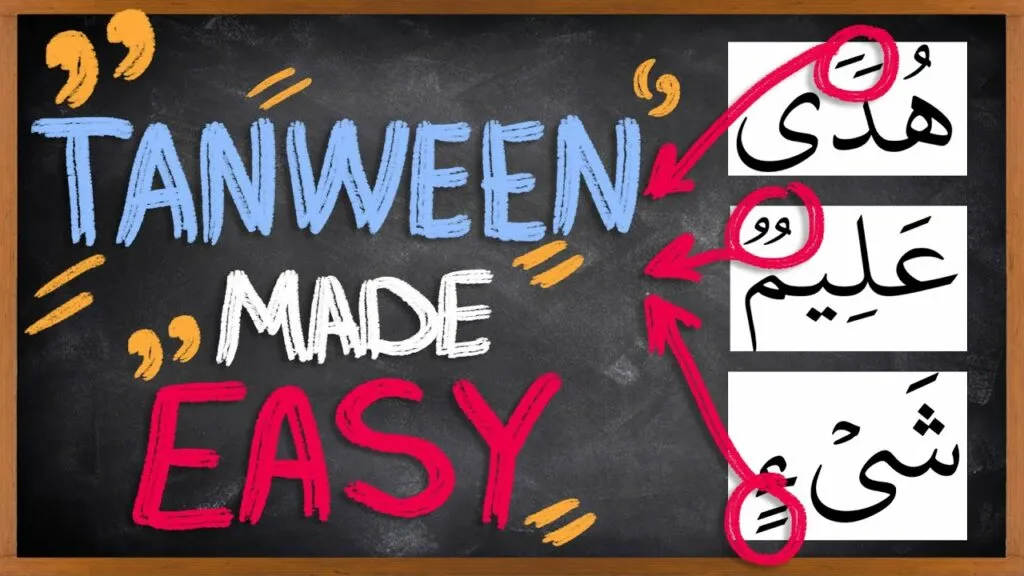
 rules of tanween in islam , the concept of “tanween” holds significant importance. Tanween refers to the diacritical marks appearing above Arabic letters, denoting a nasal sound at the end of a word. These marks play a crucial role in proper pronunciation and understanding of the Quranic verses and other Islamic texts. In this article, we delve into what is tanween in arabic , what does tanween mean , tanween examples in quran , tanween symbols , tanween in tajweed, Al-dirassa offers specialized training in Tajweed, ensuring students master the correct pronunciation and application of tanween in Quranic recitation.
What is Tanween in Arabic?
In Arabic, “tanween” (تنوين) refers to the diacritical marks appearing above Arabic letters, denoting a nasal sound at the end of a word.What Does Tanween Mean?
Tanween indicates the indefinite accusative case and denotes the absence of a definite article (“the”) in Arabic grammar. It plays a crucial role in proper pronunciation and understanding of Quranic verses and other Islamic texts.Tanween Examples in Quran
Examples of tanween in the Quran include words like “كتابًا” (kitāban), “رجلٌ” (rajulun), and “سماءٍ” (sama’in), among many others.Tanween Symbols
Tanween is represented by three main symbols:
Tanween Fatḥ : Tanween Ḍamm:
  Tanween Kasr:
Book your free trial of 30 minutes
Registration form
Types of Tanween:
There are three main types of tanween:
Tanween Fatḥ: Represented by two short horizontal lines, tanween fatḥ denotes a nasal sound resembling the “an” sound. It typically occurs when the noun is indefinite, serving as a marker for the accusative case. Tanween Ḍamm: Consisting of two short diagonal lines , tanween ḍamm signifies a nasal sound similar to “un.” Like tanween fatḥ, it appears with indefinite nouns to indicate the accusative case. Tanween Kasr : Illustrated by two short slanting lines , tanween kasr denotes a nasal sound akin to “in.” It also denotes the accusative case but appears in specific grammatical constructions.Rules of Tanween:
Application with Indefinite Nouns: Tanween is used with indefinite nouns to indicate the accusative case. For example, “كتابٌ” (kitābun) means “a book.” Agreement with Case Endings: Tanween must agree with the case endings of the nouns they modify. For instance, in the genitive case, tanween will be written accordingly. Rules of Iqlab and Idgham: Tanween undergoes assimilation (idgham) or transformation (iqlab) in specific circumstances, affecting its pronunciation and spelling.Pronunciation Guidelines:
Correct pronunciation of tanween involves nasalizing the sound while maintaining the vowel quality associated with each type of tanween.Proper Recitation in Quranic Studies:
In Quranic recitation (Tajweed), adhering to the rules of tanween is essential for precise and melodious rendition of the Quran.Importance of Tanween:
Understanding the rules of tanween is crucial for:
Accurate Quranic Recitation: Tajweed practitioners must master tanween rules to recite the Quran with proper pronunciation and articulation. Grasping Arabic Grammar: Tanween elucidates aspects of Arabic grammar, including case endings and noun declensions. Enhancing Linguistic Proficiency: Proficiency in tanween aids in comprehension and expression in Arabic, facilitating communication and scholarly endeavors. Tanween serves as a fundamental aspect of Arabic phonetics and grammar, particularly in Islamic contexts. Mastery of its rules is indispensable for Quranic recitation, linguistic proficiency, and scholarly pursuits in Islamic studies. By comprehending and applying the rules of tanween effectively, learners can deepen their understanding of Arabic language and enrich their engagement with Islamic texts, So you should follow the best institute to study the Qur’an . Al-dirassa offers a wide range of online courses in Arabic grammar and Quranic recitation, tailored to students of all levels.To Know More: Tajweed rules online for Free





No Comments
No comments yet.