
Gratitude in Islam: The Essence of the Muslim Believer
Gratitude, as the Quran reminds us, stands as a cornerstone of the Muslim faith. Within the Quran, there are several verses that emphasize the boundless blessings Allah has showered upon us.
"And if you would count the graces of Allah, never could you be able to count them. Truly! Allah is Oft-Forgiving, Most Merciful. (16:18)"
Every beat of our heart, every breath we take, every joy we experience, every challenge we overcome, each is a testament to Allah’s infinite blessings. While many of these are evident, numerous others remain hidden from our consciousness, silently aiding us in our journey. As the Quran states:
"He amply bestowed upon you His favors, [both] apparent and unapparent? (31:20)"
Given the multitude of these blessings, how should a believer respond? The answer lies in one of the most essential attributes of a believer: Shukr, or gratitude.
In Islam, gratitude is deeply intertwined with faith. As Allah explains in the Quran, humans were created to be tried, to listen, and to observe. We were given a choice:
"Indeed, We guided him to the way, be he grateful, or be he ungrateful. (76:3)"
The dichotomy between thankfulness (Shukr) and rejection (Kufr) recurs in the Quran and Arabic language. To truly appreciate Allah's benevolence, one must understand that the two are opposites. The greatest act of ingratitude is to deny Allah, reject His teachings, and forsake Islam.
When pondering over gratitude, one might ask: What does being grateful really entail?
-
Humility: Recognizing the source of all blessings fosters humility. Every favor, every act of kindness we receive from fellow humans, is, in essence, a blessing from Allah. Gratitude requires acknowledgment without arrogance.
-
Appreciation: Being aware of and cherishing the blessings in one's life isn’t arrogance; it’s recognition.
-
Righteous Actions: True gratitude is demonstrated when one uses Allah's blessings in ways that please Him, not offend Him. Using a gift against the giver is the epitome of ingratitude.
-
Acknowledgment: Mentioning Allah’s favors, with the right intention and audience, celebrates His benevolence.
The benefits of gratitude are manifold:
- It attracts Allah's pleasure.
- It safeguards from punishment, as Allah assures:
"What would Allah do with your punishment if you are grateful and believe? And ever is Allah Appreciative and Knowing. (4:147)"
- It promises an increase in blessings:
"If you are grateful, I will surely increase you [in favor] (14:7)"
Among the myriad blessings Allah has endowed us with, the pinnacle is the gift of Islam and the guidance of the Quran. This divine knowledge uplifts the soul and enriches the mind.
But beyond spiritual enrichment, let's also appreciate the tangible blessings: our faculties, health, conveniences, peace, and security. As the Prophet (pbuh) noted, the underrated blessings are good health and free time.
Conclusively, in this realm of transient trials and fleeting joys, let’s pause and be thankful for our blessings, recognizing them as signs from Allah. Gratitude isn't just about saying "thank you"; it's a way of life, an affirmation of faith, and the very essence of a Muslim believer.
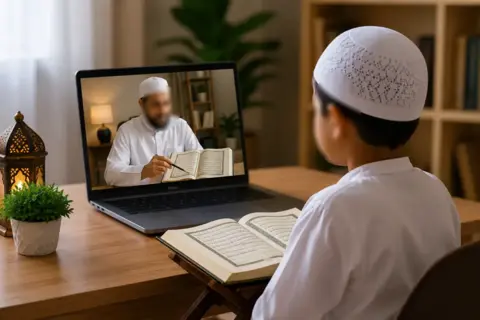
The Al-Dirassa Institute provides a range of online courses in Arabic, Quran, and Islam tailored for non-Arabic speakers. To enroll in our courses or learn more, please don’t hesitate to get in touch with us today.



No Comments
No comments yet.